
Get Found
SEO vs AEO: What Changed and What Experts Should Do Now
Search didn't die. It split in two. Here's the plain-English difference between ranking on Google and getting named by AI, what actually changed under the hood, and the moves to make right now.
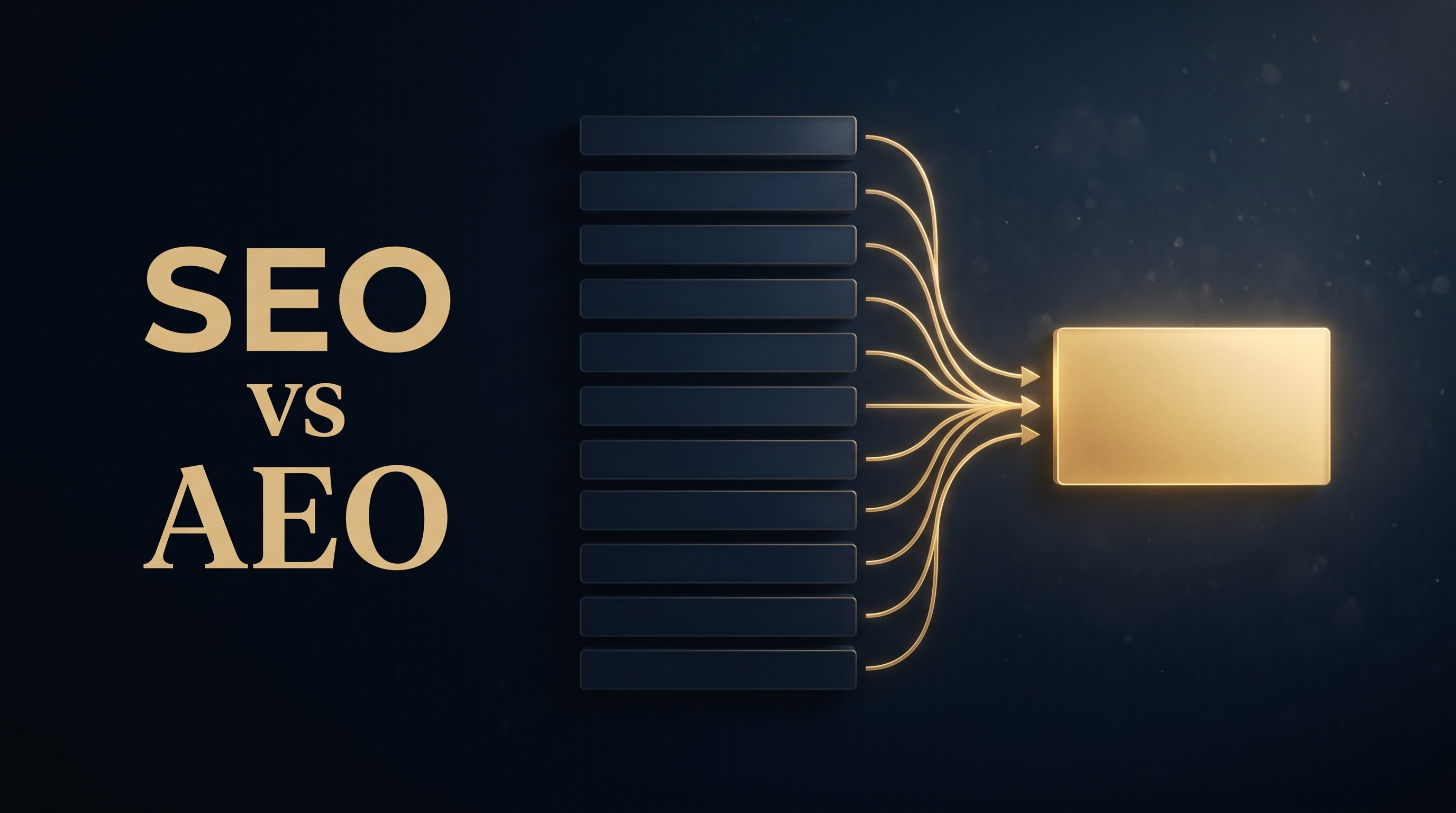
For twenty years the game was simple. You wanted to be one of the ten blue links on the first page of Google, because that's where the clicks were. That was SEO. Search engine optimization. Rank high, get found, win.
Then the machine learned to talk. Now a huge share of your buyers don't scroll ten links. They ask ChatGPT, or Google's AI overview, or Perplexity, and they get one answer. One. And either your name is in it, or it isn't. That's AEO. Answer engine optimization. And it changes the whole shape of the fight.
So what actually changed
Here's the part most people get wrong. They think AEO replaced SEO, so they panic and start over. Wrong. AEO didn't replace SEO. It sits on top of it. The AI learns who exists and who to trust from the same open web that SEO has always been about. Strong SEO is now the raw material the answer engine chews on. Kill your SEO and you starve the thing that decides the answer.
Think of it like a hiring manager who's never met you. SEO is your resume and your references, scattered across the web. AEO is whether, when someone asks the manager who to hire, your name is the one that comes out of their mouth. The resume feeds the recommendation. You need both, and they're the same effort pointed at two outcomes.
SEO and AEO, side by side
| SEO (the old game) | AEO (the new layer) | |
|---|---|---|
| The goal | Rank in a list of links | Be the source the AI names |
| What the user sees | Ten options to click | One answer, maybe one or two citations |
| What wins | Keywords, links, page speed | Clarity, specificity, structure, trust signals |
| The prize | A click to your site | Getting mentioned by name before any click |
| Who it rewards | Whoever ranks | Whoever the machine trusts most on that question |
The five moves to make right now
You don't need to boil the ocean. You need to do the handful of things that make a machine confident enough to say your name. Here they are, in order.
Say exactly who you are and what you do
Vague gets skipped. The machine can't recommend a blur. One clear sentence: who you help, with what, and what makes you different. If a stranger can't repeat it back after one read, the AI can't either.
Answer the real question better than anyone
AEO rewards the clearest, most useful answer to the actual question your buyer asks. Not the most keyword-stuffed. The most genuinely helpful. Put the direct answer in the first two lines, then earn the rest.
Add structure the machine can read
Headings, FAQs, lists, and schema markup are how you hand the answer engine a clean, labeled version of your expertise. Unstructured brilliance is invisible brilliance. This very page uses it.
Build a consistent footprint
The model gets more confident the more times it sees the same clear signal about you, across your site, your profiles, and the places that mention you. One mention is noise. A consistent pattern is trust.
Keep feeding it, because it keeps learning
The machines update. The footprint that got you named last quarter decays if you go quiet. This is a flywheel, not a one-time push. Feed it steadily and it compounds in your favor.
Questions people ask
Is SEO dead now that AI answers questions?
What's the real difference between SEO and AEO?
How do I get my business mentioned by ChatGPT?
Should I stop doing SEO and only do AEO?
Learn how to get named, not just ranked
The free masterclass walks through exactly how the right clients, and the machines they ask, come to find you by name. Under 40 minutes.
Watch the free masterclass